
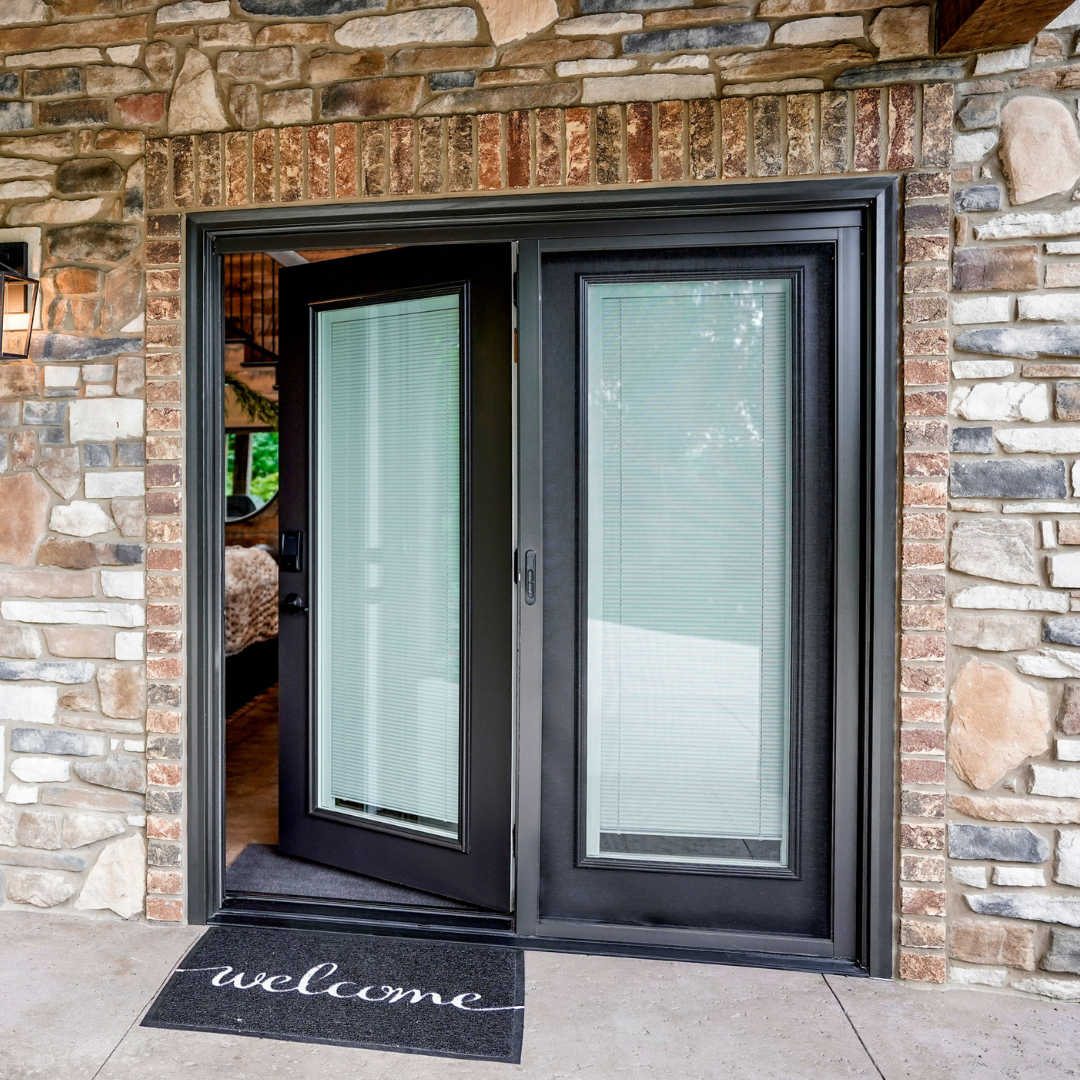
A Straightforward Guide for Homeowners
If you’re planning to replace a door in your home, you will run into terms like “left-hand inswing” or “right-hand outswing.” These aren’t just technical details. They determine how your door opens, how it fits in the space, and whether it operates the way you expect once installed.
When we install new doors, we take care of these specifications. But if you’ve ever been curious about how we determine handing and swing, and why it matters, here’s what you need to know.
Why Door Swing Direction Matters
Getting the swing wrong might not seem like a big deal at first. That is, until your brand-new door arrives and it doesn’t fit the way you thought it would. Suddenly, the space feels cramped. The door opens into furniture. Maybe it even swings into another door.
It happens more often than you’d think. And the worst part is that doors can’t typically be returned once ordered.
You shouldn’t have to live with that kind of mistake. And you don’t have to. Whether you’re building a new home or updating your entryway, understanding swing direction ensures everything fits and functions the way it should.
Inswing vs. Outswing: What’s the Difference?
One of the first things we determine is whether a door is inswing or outswing.
- Inswing doors open into your home or room. This is the most common configuration for front, back, and interior doors.
- Outswing doors open toward the outside. These are used when indoor space is limited, or when additional weather resistance is needed.
To identify the swing direction, imagine standing on the side where you are entering from.
- If the door swings away from you and into the home, it’s an inswing.
- If the door swings toward you and outward, it’s an outswing.
What Is Door Handing?
Handing refers to whether a door is left-handed or right-handed. It’s determined by which side the hinges are on when you’re standing on what’s considered the “outside” of the door.
For an exterior door, the “outside” is the keyed side. That’s the view from the street or the porch.
From there, it’s just the hinges:
- Hinges on the left means it’s a left-hand door.
- Hinges on the right means it’s a right-hand door.
That’s the whole rule. Hinges, seen from outside.
One thing to watch out for
You’ll find guides online that tell you to look at the doorknob instead of the hinges. That shortcut does exist, and it works, but only if you’re standing with your back to the hinges and looking out through the opening.
If you’re on the porch looking at your door, the knob is on the opposite side from the hinges, so the knob rule gives you the reverse answer. It’s an easy way to end up ordering exactly the wrong door.
So when in doubt, ignore the knob and look at the hinges.
Putting Swing and Handing Together
Once you know the hinge side and the swing direction, you have the full description. Here’s how it’s labeled:
| Hinges seen from outside | Door opens | Called |
|---|---|---|
| Left | Inward | Left-Hand (LH) |
| Right | Inward | Right-Hand (RH) |
| Left | Outward | Left-Hand Outswing (LHO) |
| Right | Outward | Right-Hand Outswing (RHO) |
So if you’re standing outside your front door, the hinges are on the right, and the door opens inward into your home, that’s a Right-Hand (RH) door. If that same door opened outward instead, it would be a Right-Hand Outswing (RHO).
One note if you’re comparing quotes: manufacturers don’t all label outswing doors the same way. Some describe a right-hinged outswing door as “left-hand reverse” instead. The door is identical either way, and it’s one more reason to tell your installer which side the hinges are on rather than which label you think applies.
You may also want to watch our video, which walks through it on a real door:
Schedule Your Free Phone or In-Home Consultation
At Window Works, we use this standard method when measuring, ordering, and installing your new doors. You don’t need to worry about getting it right. We’ll take care of that. But having a general understanding of the terminology can help you feel more confident during the planning process.
Every project we work on includes a site visit where we confirm the correct handing and swing for your space. We consider layout, traffic flow, and hardware placement to ensure a smooth installation.
If you’re thinking about upgrading your doors, reach out to schedule a consultation. We’ll handle the details, from hinge placement to hardware, so everything fits just the way it should.