Pricing
Plan Your Project
What will your project cost?
Every home is different, so exact pricing takes an in-home visit. But you shouldn't have to guess whether new windows and doors are within reach. Slide to a project size below to see the lowest monthly payment we can offer through financing.
Total project investment
$22,745
Our average customer's spend for a house full of windows.
As low as
$284/mo
Estimated lowest payment with approved financing. Actual terms depend on credit and plan selected.
What keeps a project toward the lower end
- Standard-size, double-hung replacement windows
- Quality vinyl frames
- Simple, straightforward glass packages
- Easy access on the first floor
- Replacing openings as-is, with no structural changes
What moves a project toward the higher end
- More windows and doors in the project
- Specialty shapes like arches, circles, and trapezoids
- Oversized windows or hard-to-reach upper floors
- Premium glass packages and upgraded energy performance
- Wood and fiberglass frames over standard vinyl
- Unique construction challenges uncovered during install
One of the few projects that pays you back
New windows aren't just a purchase. They return real value. The national Cost vs. Value Report consistently ranks window replacement among the home projects that recoup the most at resale, and quality frames keep paying you back every month in lower energy bills. The U.S. Department of Energy estimates that replacing older single-pane windows can save a home as much as $465 a year.
* Source: Zonda Cost vs. Value Report
Why we won't quote your project without seeing your home
It's not the window that makes pricing tricky. It's the installation. How deep your walls are, what your casing and trim are made of, how the original openings were built, whether there's hidden damage behind the frame: none of that is visible from the curb, and all of it shapes what your project really costs.
That's why every project starts with a free in-home consultation. We measure twice, look closely at how your openings were built, and walk you through the options that fit your home and your budget. You get accurate measurements, a clear picture of your choices, and a firm price you can trust, with no surprises after work begins.
Payment estimates are for planning purposes only. Resale figure reflects roughly 67% of project cost recouped for vinyl window replacement per the Zonda Cost vs. Value Report. Energy savings per ENERGY STAR and the U.S. Department of Energy. Actual results and financing terms depend on your home, product selection, and approved credit.
Window Costs Overview
What drives prices up?
When you start researching window and door replacement, the range of prices you encounter can feel bewildering. A $7,000 project and a $90,000 project can both be called “window replacement.” Here is what actually separates them.
The frame material is the first thing that moves the needle. Fiberglass holds its shape through North Carolina’s whiplash weather, from August humidity to January cold snaps, without warping, swelling, or losing its seal. Vinyl is more affordable upfront but expands and contracts with every temperature swing, which is hard on the seal between the glass panes over time. The cost of a high-end window reflects years of research and design that went into its development. When you choose Andersen or ProVia, you are paying for engineering that has been refined over decades, not just a frame and some glass.
The glass itself is a separate cost driver, and an important one. Low-E coatings on the glass surface filter out ultraviolet light without blocking natural light. That matters for more than energy bills. UV exposure is one of the primary causes of fading in hardwood floors, upholstered furniture, artwork, and rugs. A low-E window is quietly protecting everything in the rooms it faces, year after year. The gas fill between the panes matters too. Argon is the standard and it does its job well. Krypton performs better in thinner profiles and costs more. Triple-pane glass adds another layer of insulation and another step up in price.
Some glass specifications are not optional. Building code requires tempered glass in certain locations, including bathrooms, windows close to doors, and any opening where a fall or impact is more likely. Tempered glass is engineered to break into small, less dangerous pieces rather than sharp shards. If your opening requires it, the cost is not negotiable and it is not a contractor markup. It is there to protect your family.
Size and shape are two different things and both affect price. A larger opening requires more material and often more labor. A non-standard shape, whether an arched top, a circle, a trapezoid, or any specialty configuration, is typically custom-fabricated and priced accordingly. The difference between a standard rectangle and a custom arch over an entry door can be significant even when the frame material is identical.
Where a window sits in your home affects cost in ways that are easy to overlook. A ground-floor opening is straightforward to access. A window over a second-story open foyer may require a lift to reach safely. That equipment has a cost, and it shows up in your quote.
Installation type is another major driver. Full-frame replacement, where the existing window, frame, and trim are removed entirely, is the most involved and most expensive approach. Pocket insert replacement, which places a new window inside a structurally sound existing frame, costs less because it requires less labor and fewer materials. ConsumerAffairs, Windows and Doors Statistics
Most windows are made to order. The specific material, color, finish, hardware, glass package, and grille pattern you choose are typically configured for your home specifically. That degree of customization is built into the price from the start.
What drives prices up?
The most straightforward path to a lower project cost is choosing a pocket insert installation over full-frame, provided your existing frames are structurally sound and free of rot or moisture issues. Standard rectangular sizes cost less than specialty shapes. Single-hung windows are the least expensive window style. Vinyl is the least expensive frame material. Replacing all your windows at once rather than delaying part of the project eliminates duplicated setup, delivery, and disposal costs each time a crew mobilizes.
Competitor Overview
Why are some companies more expensive than others?
The premium is almost never about the showroom or the brand name on the truck. It is about what happens inside your home on installation day, and what happens when you call five years later.
The best installation crews are independent craftspeople who have built reputations over decades. What separates a premium company is not whether they employ crews directly, but whether they have done the hard work of finding those people, vetting them thoroughly, and maintaining those relationships over years. At Window Works Co., our primary installation crew has been with us for 17 years. When they are in your home, you are getting people who have installed thousands of windows in Triangle-area homes, who know how North Carolina’s clay soil affects how houses settle, and who take the same care on job 10,000 that they took on job one.
The materials used around the window matter as much as the window itself. Window Works uses silicone-based expansion caulk rather than standard construction caulk. It costs four times more, but it moves with your home through temperature swings instead of becoming brittle and cracking, which is what keeps water where it belongs. You will never see the difference on installation day. You will see it, or not, over the life of your home.
Finally, the warranty behind the product only means something if the company standing behind it will still be there. Several window companies have entered the Triangle market in recent years offering lifetime warranties after being in business for less than three years. Window Works Co. has been in business since 2007. We will be here to honor our commitments.
Why are some companies cheaper than others?
They are cutting somewhere. It is almost always in the crew, the product grade, or the installation materials.
A vinyl-clad window may be cheaper than a fiberglass option upfront, but vinyl expands and contracts with temperature swings. Over time that leads to seal failure and maintenance issues that cost real money to address. A lower quote often reflects a lower-grade product that will need attention sooner than you expect.
The installation itself is where the most invisible cuts happen. Standard construction caulk, an unvetted crew, a rushed timeline. The best window installed improperly will eventually fail. Poor craftsmanship shows up as leakage, seal failure, and gaps between the sill and the frame. By the time those problems are visible, the company that installed them may be difficult to reach, or gone entirely.
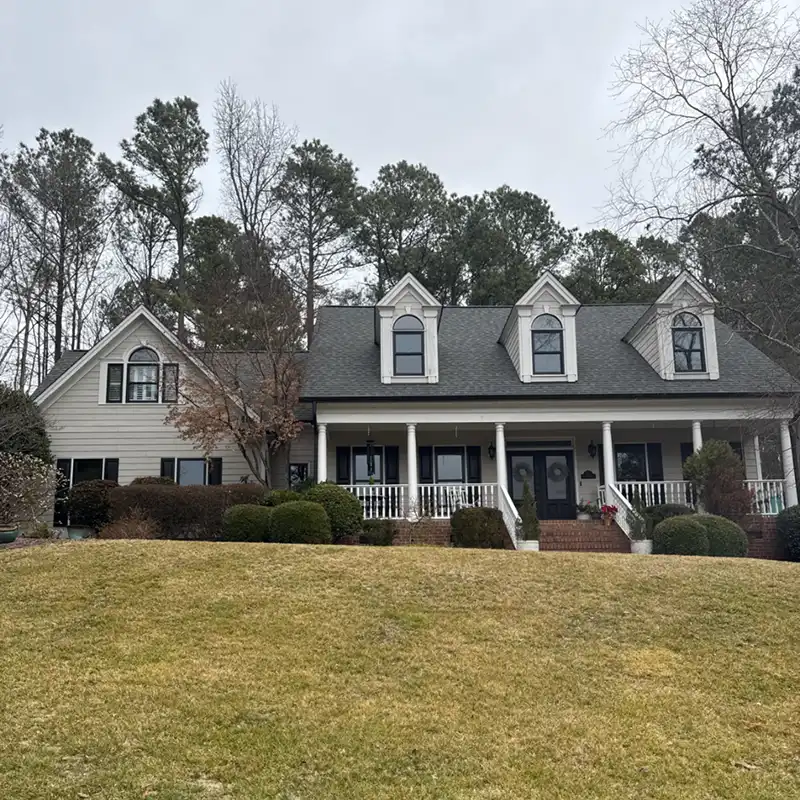
Honest Pricing. No surprises.
Where do our prices fall?
Window Works Co. is not the cheapest option in the Triangle, and we are not trying to be. Our projects start at $7,000 and our average project since 2021 has been $22,745. We work with Andersen, ProVia, and Vinyl Design for windows, and Andersen, ProVia, Therma-Tru, DSA Mastercrafted, and Rogue Valley for doors. Every project is installed by crews we have vetted personally and worked alongside for years.
- What we offer is transparent pricing, no hidden fees, and no surprises.
- If the lowest quote in the market is what you are looking for, we are probably not your company.
- If you want the project done once, done correctly, backed by a team that answers the phone when you call years later, we are.
Raleigh-Durham Cost Averages
Typical Price Ranges
Window and door replacement projects in the Raleigh-Durham area typically range from $7,000 to $120,000 or more. Targeted pocket-style replacements sit at the lower end. Comprehensive full-frame installations with high-performance materials, custom architectural elements, and specialty configurations sit at the upper end. The average Window Works project since 2021 has been $22,745.
Window style plays a meaningful role in cost. Single-hung windows are the least expensive, followed by double-hung, then gliding windows, with casement and awning windows generally the most expensive. Installation type shapes the budget significantly as well. Pocket insert replacement is the least expensive approach; full-frame replacement, which removes the existing window, frame, and trim entirely, is the most expensive because it requires more materials and more labor. ConsumerAffairs, Windows and Doors Statistics
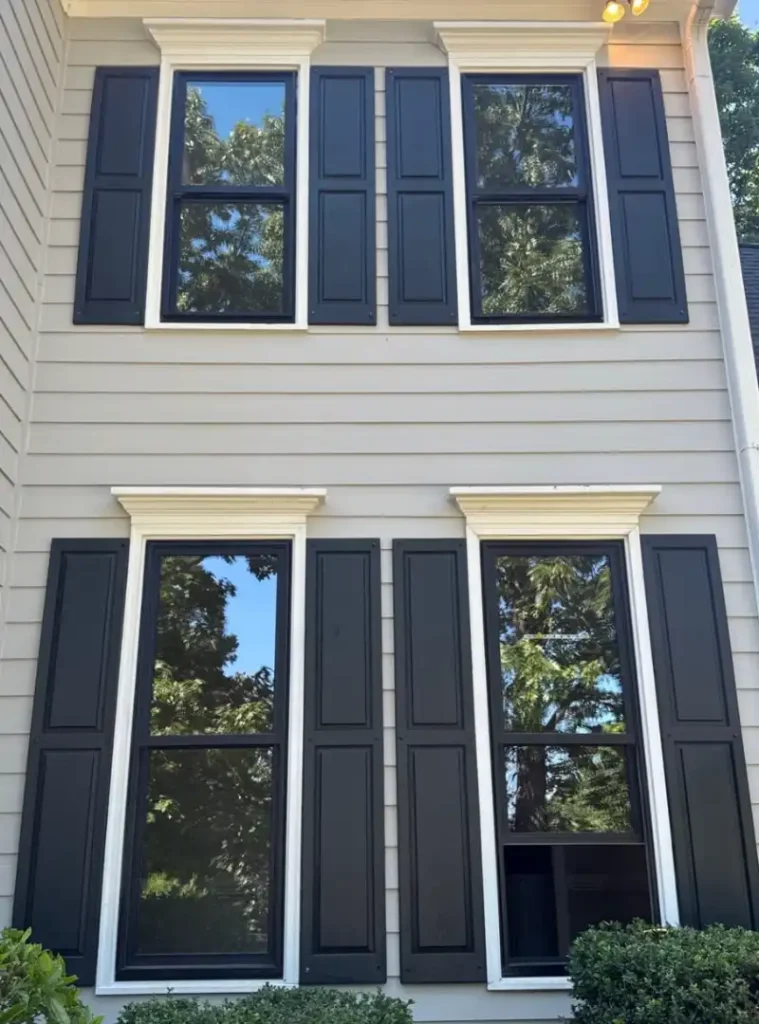
Investment Mindset
Lifetime cost vs. initial price
The price on the quote is not the number that matters most. The number that matters is what you spend on your home’s windows over the next 30 years.
A fiberglass window costs more upfront than vinyl. It also holds its seal longer in North Carolina’s heat and humidity, requires almost no maintenance, and is far less likely to need early replacement. A vinyl window that fails at year 12 and has to be replaced costs significantly more over a 30-year horizon than a fiberglass window that performs cleanly until year 30. That calculation belongs in every conversation about budget.
The glass choice belongs in that conversation too. Low-E coatings are not just an energy upgrade. They are protecting your floors, your furniture, and your art from the slow, invisible damage that UV exposure causes over years of southern sun. Energy-efficient windows can save meaningfully on annual heating and cooling costs, and qualifying windows have historically been eligible for federal energy tax credits. Check with your tax advisor for current eligibility, as this area of tax law has changed recently. IRS Energy Efficient Home Improvement Credit
According to the 2024 Zonda Cost vs. Value Report, vinyl window replacement recoups 67% of project cost at resale, and wood window replacement recoups 63%. Zonda 2024 Cost vs. Value Report If you are thinking about selling your home in the next several years, that return is real and it is immediate.
Get ahead of the trend
Historical pricing trends
Window prices have not come down, and there is no credible case that they will. Wholesale prices for wood doors and windows increased 49% from January 2020 to January 2024. Wholesale prices for metal doors and windows increased 59% during that same period, with the sharpest increases arriving in late 2021 and carrying through most of 2022. ConsumerAffairs, sourced from Federal Reserve Bank of St. Louis FRED Producer Price Index data
More recent Producer Price Index data from the U.S. Bureau of Labor Statistics shows the trend continuing into 2026, with metal doors and frames up 11% year over year and flat glass up more than 6% year over year as of early 2026. Door and Window Magazine, PPI reporting Major manufacturers typically raise prices in January of each year.
It is worth understanding the difference between a delayed project and a planned one. A phased project, where you replace one elevation of your home now and another later, is a legitimate strategy. A delayed project, where you put off the whole thing and come back to it next year, costs more simply because prices will have gone up. Those are two different situations. Delay adds cost with no corresponding benefit. A well-planned phase, by elevation, can make sense for the right home and the right budget.
Affordable Replacement Options
Financing and payment options
Window Works Co. offers four ways to pay, and one of them saves you money immediately.
Paying in full by cash or card at signing earns a 9.8% discount off your project total. No interest, no monthly payments, no fees. On a $22,745 project, that is more than $2,200 back on day one.
For homeowners who prefer to finance, we offer three programs through our lending partner. A 9.99% APR plan with no payoff deadline. An 18-month no-interest promotional plan where interest accrues during the term but is waived entirely if you pay in full before the 18 months are up. And a 5.99% APR plan that carries a higher monthly payment than the 9.99% option but results in less total interest paid over the life of the loan.
Our financing options exist so that the right project does not get quietly compromised into a smaller one because of upfront budget constraints. The windows your home needs should not be determined by what is available to pay for in one check.
Simple plans. No surprises.
Flexible financing for your Window & Door project
Three options to choose from:
- 18 Months No Interest: A great option if you plan to pay off your project in less than a year and a half. Interest is billed during the promotional period but will be waived if the loan is paid in full before the 18-month term expires.
- 10.99% APR Until Paid in Full
- 5.99% APR Until Paid in Full