Homeowners in Morrisville who visit our showroom are often in the middle of upgrading builder-grade finishes — new, energy efficient windows and doors, updated hardware, fresh paint. They’re chasing something that’s hard to name but easy to feel: the charm of a home that looks finished, considered, and a little bit special. One of the smallest details that delivers the biggest dose of that charm is something most people have never heard of: the plinth block.
It’s one of those things you’ve almost certainly seen without knowing what it was called. And once you know what to look for, you’ll start noticing its presence — and its absence — everywhere.
What Is a Plinth Block?
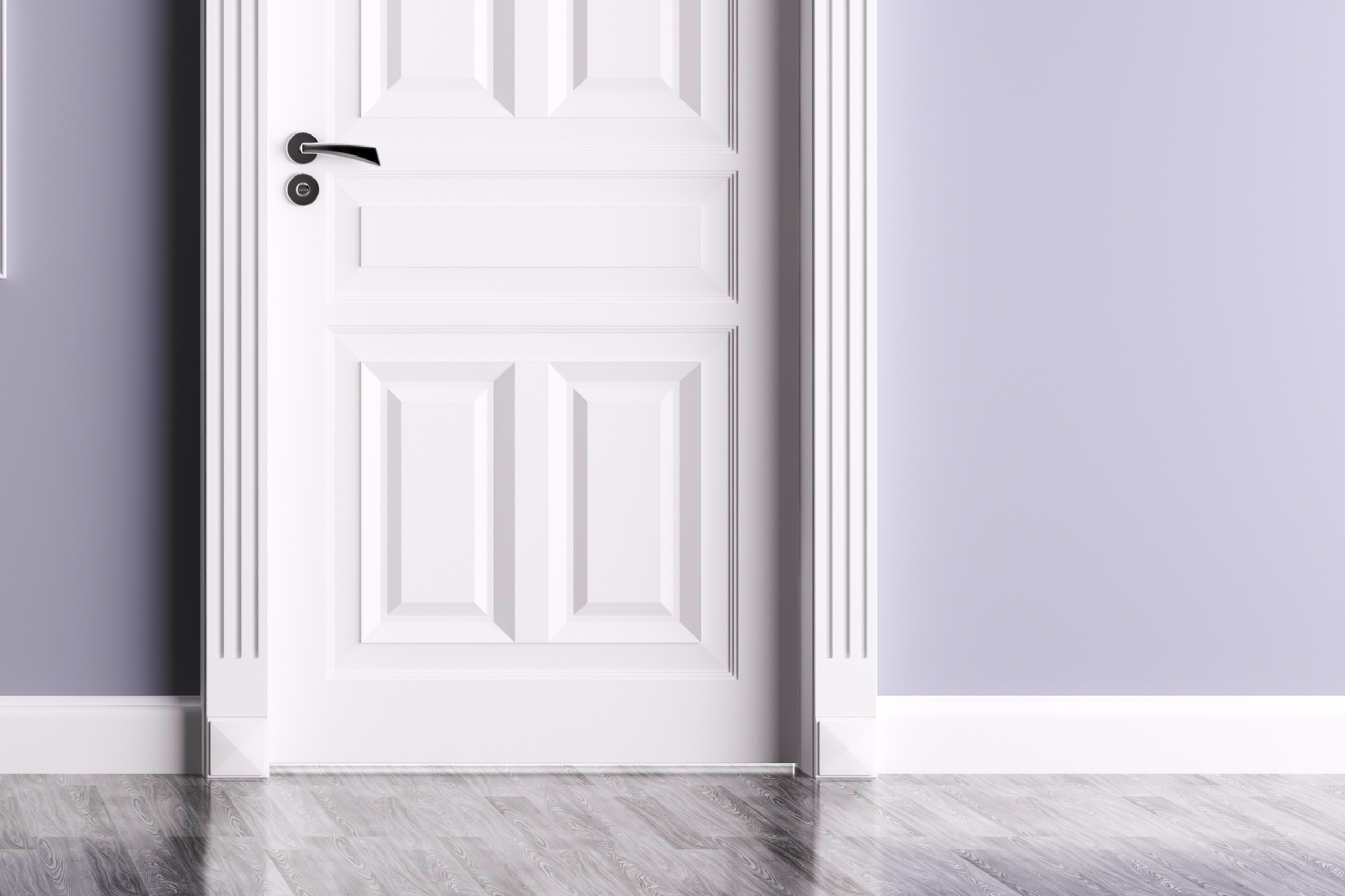
A plinth block is the small decorative block of trim installed at the very bottom of a door casing, right where the vertical door trim meets the baseboard. Instead of the door casing and baseboard meeting directly, the plinth block sits between them as an intentional, elegant transition point.
Think of it as the period at the end of a sentence. The door casing runs down the side of the door frame, hits the plinth block, and stops. The baseboard runs along the wall, hits the other side of the plinth block, and stops. Everything terminates cleanly, with purpose — and with a quiet charm that elevates the whole room.
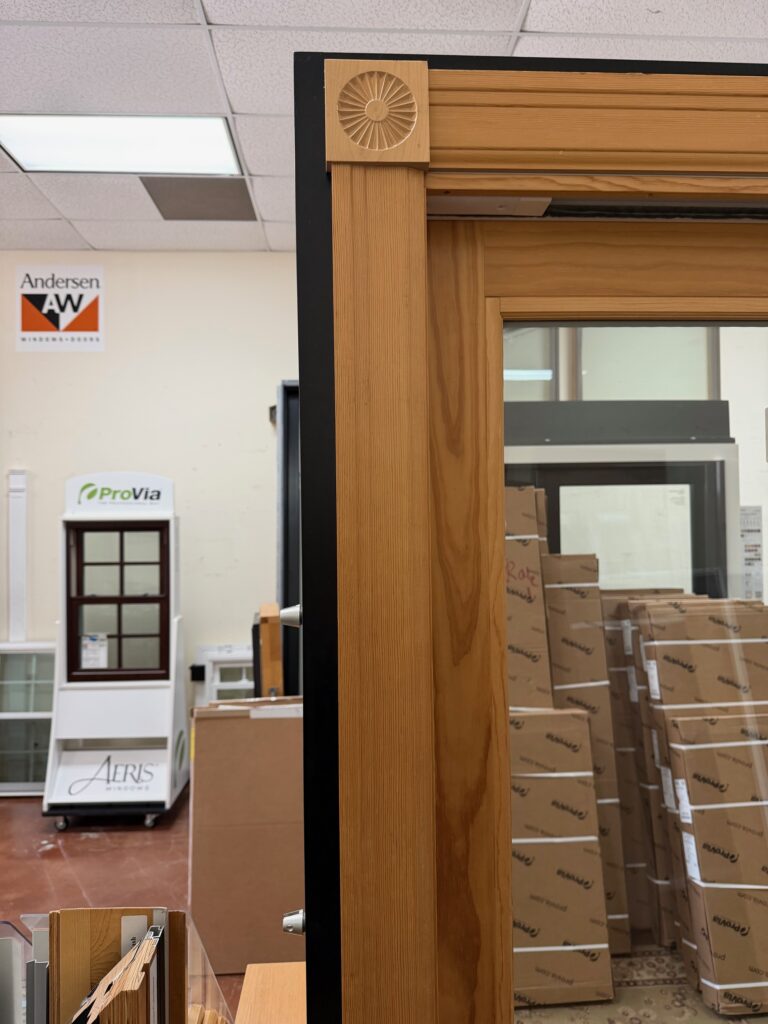
You may also see plinth blocks applied purely for decoration at the top edges of door. These are less common, but here’s an example from our showroom.
A Little History
The word plinth comes from classical architecture, where it referred to the square base supporting a column. Walk into any grand old courthouse or historic home in North Carolina and look down at the base of the door trim — chances are you’ll see plinth blocks doing exactly what they’ve always done: grounding the doorway and giving the whole composition a sense of weight, finish, and old-world charm.
They fell out of fashion during the era of builder-grade construction, when speed and cost meant simpler trim details. But they’re very much back, and for good reason.
What Does a Plinth Block Actually Do?
Plinth blocks are both decorative and functional — which is the best kind of detail.
Decoratively, they add an intentional architectural punctuation mark to your doorways. Rather than the casing and baseboard simply meeting at the floor, the plinth block gives that junction a sense of ceremony. It’s a small thing that signals a home has been finished with care — and it’s a reliable source of the kind of understated charm that makes a house feel like a home.
Functionally, they solve a real problem. Door casings and baseboards are rarely the same thickness, which means getting them to meet neatly at the corner requires precision — and even perfect joinery can show small gaps over time as wood naturally expands and contracts with our humid North Carolina seasons. Because the plinth block is slightly thicker than both the casing and the baseboard, everything simply butts up against it. Clean, simple, and forgiving.
They also offer practical protection in high-traffic areas. That lower corner of the door frame takes a beating from everyday life — shoes, vacuums, furniture. In homes with wheelchair users or mobility equipment, plinth blocks can stand up to the repeated contact that comes with daily navigation through doorways. A plinth block adds mass and durability right where it’s needed most, protecting the trim and keeping the doorway looking sharp for years longer than it otherwise would.
Why Morrisville Homeowners Are Adding Plinth Blocks
Morrisville has seen tremendous growth over the past two decades, and with that comes a lot of beautifully built but similarly finished homes. Many homeowners we talk to have reached a point where they’re ready to make their home feel less like every other house on the street — and more like theirs.
Sometimes that starts with a door. If you’re already considering a door upgrade — whether because your current door is showing its age or simply because you’re ready for something that better reflects your style — adding plinth blocks at the same time is a natural and cost-effective way to make the whole project feel complete. A beautiful new door deserves a beautifully finished frame.
And if you’re not replacing your door but still want to add some charm and character? Plinth blocks are a wonderful place to start on their own. The materials are inexpensive, installation is straightforward, and the impact — the way a room suddenly feels more deliberate, more finished, more designed — is genuinely disproportionate to what you spend.
What Do Plinth Blocks Look Like?
They come in a wide range of profiles — from simple and clean-lined to more ornate and traditional. The right choice depends on the overall style of your home and the profile of your existing trim.
As a general rule, the plinth block should be slightly taller and thicker than both the baseboard and the door casing. This “standing proud” of the surrounding trim is what makes it read as an intentional architectural feature rather than just another piece of wood. Proportion matters: a block that’s too small looks like a mistake, while one with the right dimensions looks like it was always meant to be there — because architecturally, it was.
Are Plinth Blocks Right for My Home?
They work beautifully in traditional, craftsman, colonial, and transitional style homes. In very modern or minimalist interiors where trim is intentionally simple or absent, they may feel out of place — though even then, a clean square plinth block can add subtle structure without feeling fussy.
The thing we hear most often after homeowners add plinth blocks is some version of: “I can’t believe what a difference such a small thing makes.” That’s the charm of good trim detail. It doesn’t shout — it just makes everything around it feel more intentional and complete. Visitors won’t necessarily be able to name what’s different about your home. They’ll just feel it.
Thinking About New Doors for Your Home?
Details like plinth blocks are exactly the kind of thing we love to talk through during a consultation. If you’re exploring door replacement in the Morrisville area, we’re here to help you think through not just the door itself, but all the finishing details that make the result feel truly special.
Schedule a free consultation — no pressure, just a good conversation about your home.