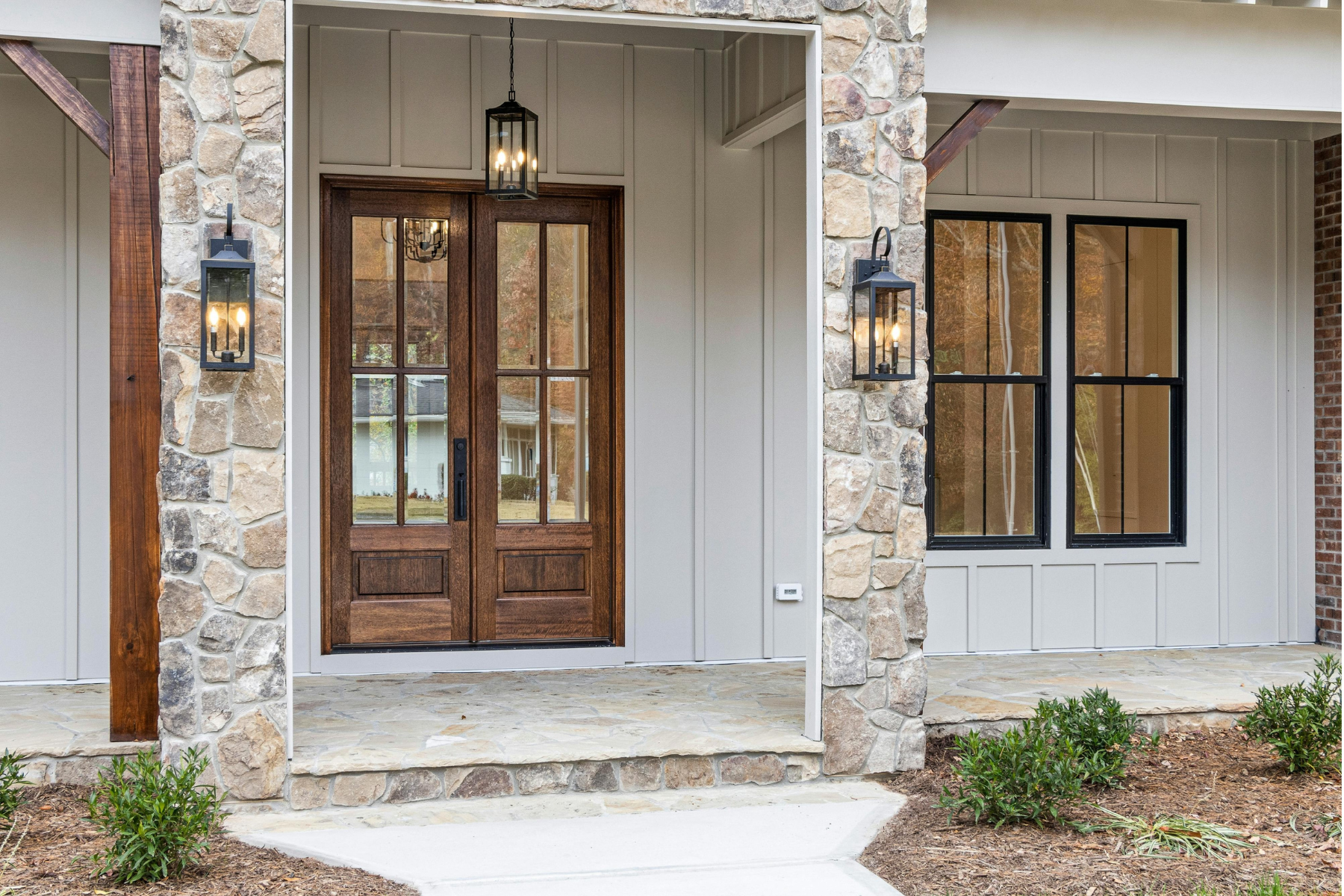
When we’re doing door replacement design consultations in Apex, one of the most common requests we hear is this: “I have a front door with sidelights, and I’d love to replace it with double doors! Is that possible?” Or sometimes the reverse.
We love the enthusiasm. And sometimes it’s absolutely doable. But before you fall in love with a new grand entryway, there are some things you need to know. Because what looks like a straightforward door swap is often a significant construction project — and the cost of the doors themselves is frequently the smallest part of the bill.
Why Can’t You Just Swap One for the Other?
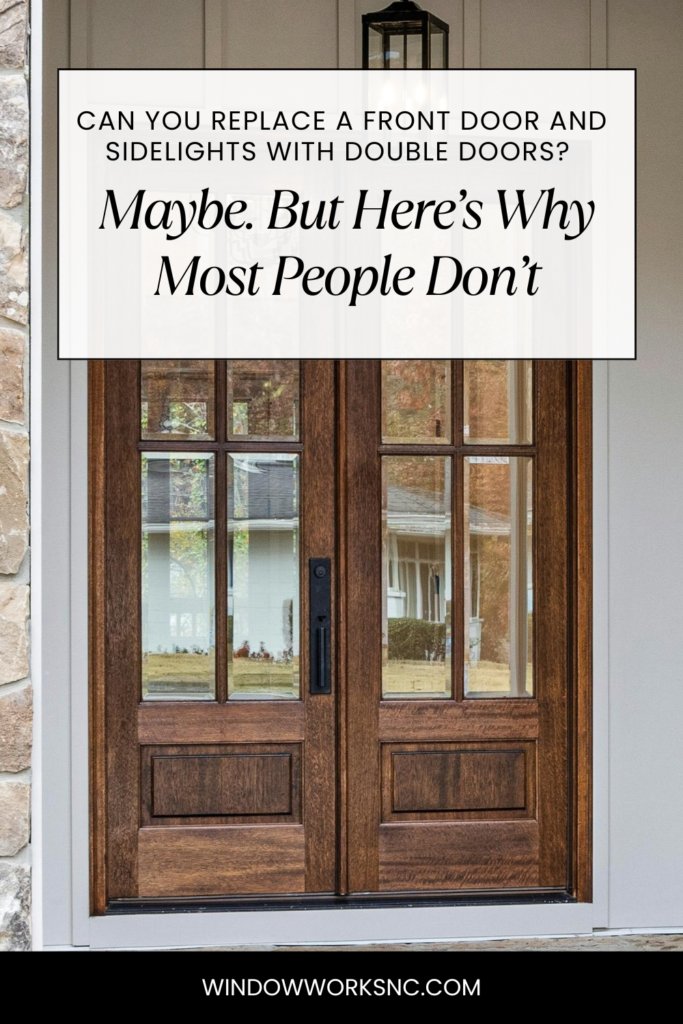
It seems simple on the surface. A front door with two sidelights and a double door system occupy roughly the same visual footprint. So why not just pull one out and put the other in?
The short answer is that the opening in your wall — the rough framing, the header above it, and the exterior cladding around it — is built specifically for what’s already there. Changing the configuration almost always means changing the structure. And that’s where it gets complicated.
Going from a Front Door and Sidelights to Double Doors
This is the most common request we hear. A homeowner has a front door flanked by sidelights and wants the drama of a double door grand entryway instead.
Here’s the problem. Sidelights are fixed windows. They’re narrow, usually only 10-14 inches wide . The door slab in the center is typically 36 inches wide. Double doors need a clear opening of at least 60 to 72 inches — enough for two full door panels side by side.
In most cases, that opening simply doesn’t exist yet. Creating it means:
Widening the rough opening. The framing inside your wall has to be cut back and restructured to accommodate a wider door unit. This is real carpentry work, not a door installation.
Replacing the header. The header is the structural beam that spans the top of the opening and carries the load of the wall above it. A wider opening needs a wider, stronger header. Depending on your home’s construction, this can be a significant structural intervention.
Matching the exterior cladding. Here’s where it gets expensive in a hurry. If your home has brick, stone, or any kind of masonry veneer around the existing entry, widening the opening means cutting into that material. Matching existing brick or stone — especially on a home that’s been weathered for years — is notoriously difficult and costly. The material itself is hard to match. The labor is specialized. And the result, even when done well, is rarely invisible.
Put all of that together and you’re looking at a project that goes well beyond a door replacement. For many homeowners, when they understand the full scope, they decide the outcome doesn’t justify the investment.
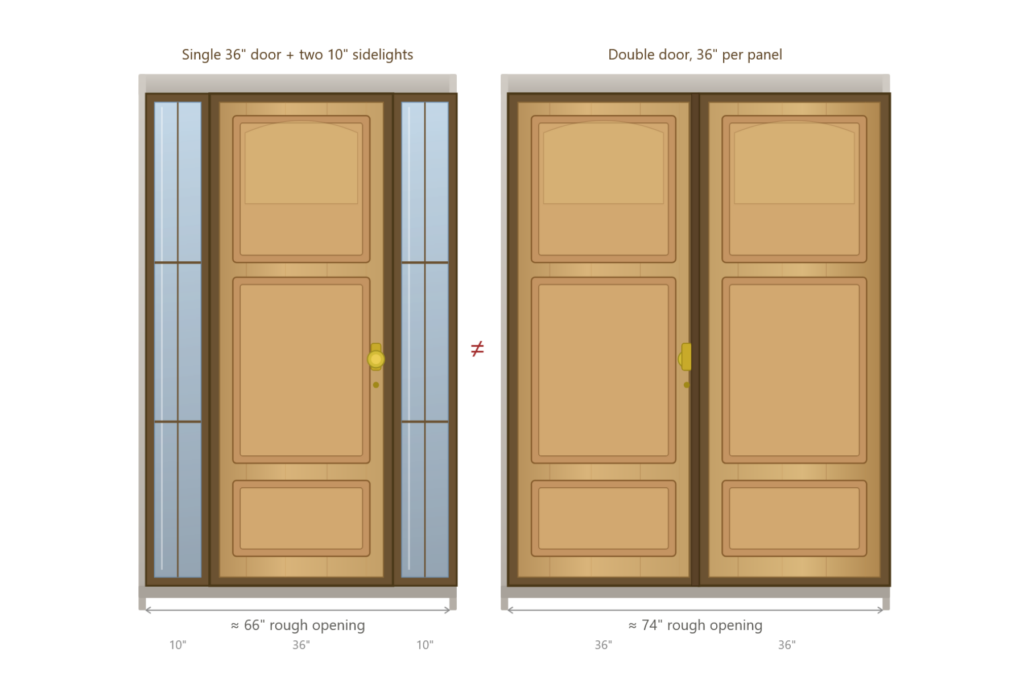
Going from Double Doors to a Front Door and Sidelights
You might think this direction is easier. You’re making the opening smaller, after all. But it comes with its own complications.
Filling in the opening. Double door openings are wide — often 60 to 72 inches. A standard front door is 36 inches. That leaves a significant gap on one or both sides that has to be framed, insulated, and covered. And that covering has to match your existing exterior.
If your home has brick, stone, or other masonry cladding, filling in that gap to match is skilled and often expensive work. Even with wood or fiber cement siding, getting a seamless match can be surprisingly challenging.
Resizing the header. Just as with widening, narrowing an opening may require header work — particularly if the existing header was sized specifically for the wider double door span.
Proportional considerations. A smaller opening on a facade designed around double doors can look awkward if not carefully handled. The surrounding architecture — columns, trim, transom windows — was often designed with the wider entry in mind.
So When Does It Make Sense?
Sometimes it absolutely does. If your home has wood or fiber cement siding that can be matched well, if the framing work is relatively straightforward, and if you have a contractor you trust to manage the full scope, the project can be worth it.
We’ve seen beautiful transformations in both directions. But the homeowners who end up happiest are the ones who went in with eyes open — who understood the full cost picture before they committed, not after the walls were opened.
What Most People End Up Doing
When we walk homeowners through what’s actually involved, many of them reach a different conclusion than they expected. Not because the dream wasn’t worth having, but because the money that would go into the structural and cladding work could often be better spent elsewhere — on a stunning new door within the existing configuration, upgraded hardware, a new transom, better lighting, or landscaping that frames the entry beautifully.
A spectacular front door with sidelights is still a spectacular entry. So are double doors. The goal is a front entry you love — and getting there doesn’t always require moving walls.
Let’s Talk Through What’s Actually Possible for Your Home
If you’re exploring door replacement in the Apex area and wondering what your options really are, we’d love to have an honest conversation about it. We’ll tell you exactly what’s involved, what it’s likely to cost, and whether there’s a path to the entry you’re imagining — or a smarter way to get there.
Schedule a free consultation — no pressure, just a straight conversation about your home and what’s possible.