
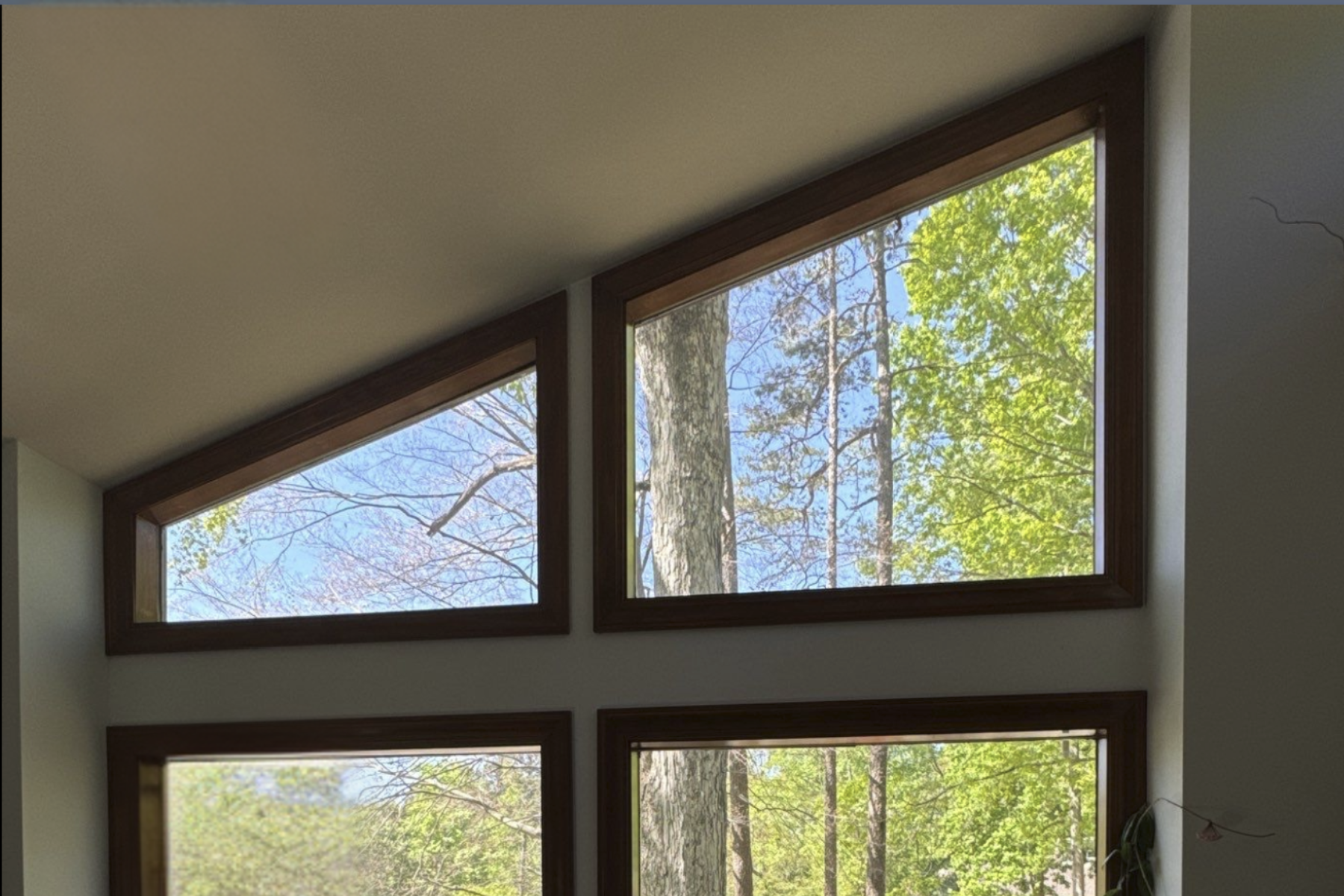
When we’re out doing in-home design consultations in Durham, one particular kind of window keeps coming up. Homeowners have spotted it in a magazine or on Pinterest. Or, they’ve seen it in a neighbor’s new build.
They don’t always know what it’s called. They just know it looks like the window was made for the house.
Most of the time, what they’re describing are windows that follow the roofline. It’s one of the most exciting trends in home design right now. And it might be more achievable than you think.
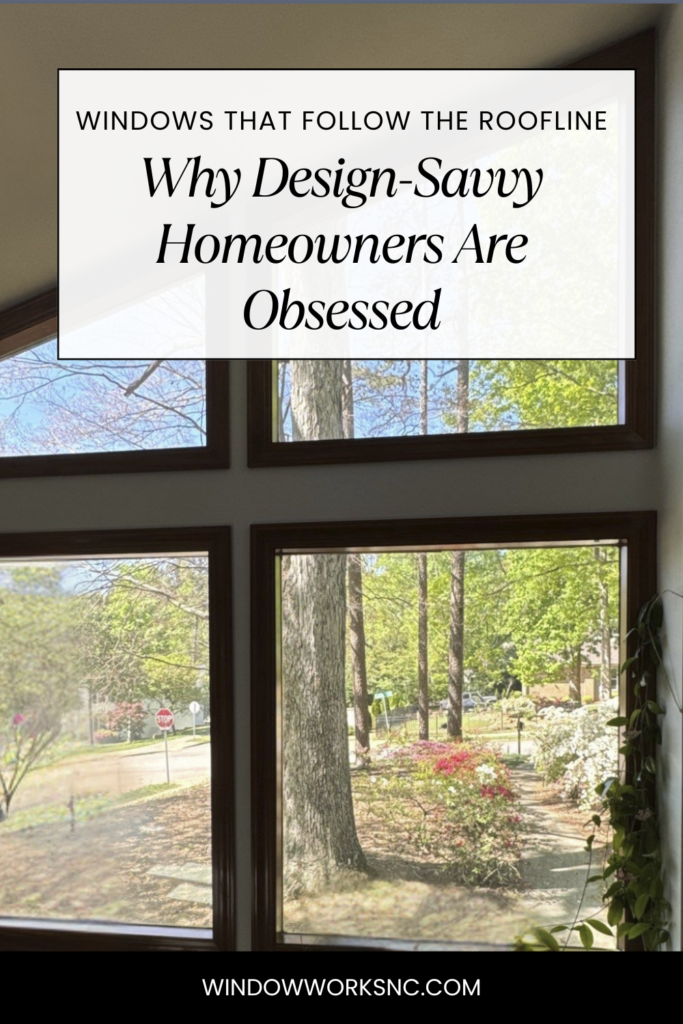
What Are Roofline Windows?
Roofline windows are specialty-shaped picture windows. They’re typically triangular, trapezoidal, or pentagonal. And they’re designed to follow the angle of the roof rather than sit as a plain rectangle in the wall.
“Picture window” simply means the window is fixed and doesn’t open. Like a picture frame, it’s there to admit light and frame a view.
The effect is striking. The window echoes the geometry of the roof above it. Everything feels like it belongs together. Because architecturally, it does.
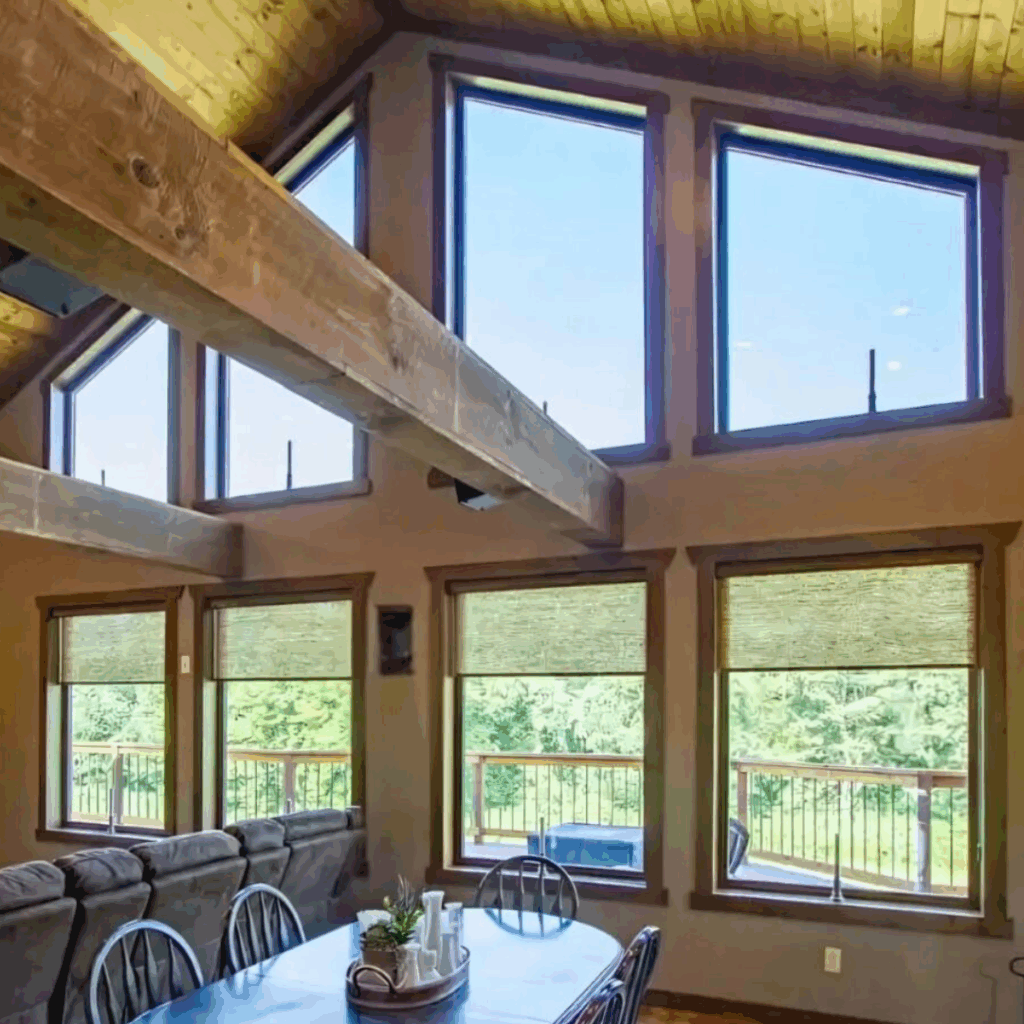
You’ll most often see roofline windows in gable ends, which are the triangular wall sections beneath the peak of a pitched roof. They also appear in vaulted spaces where the ceiling follows the roofline, and in contemporary and modern farmhouse designs where structure, geometry, and airiness are part of the aesthetic.
Why Are They Trending Right Now?
Andersen Windows noted in their annual trends report that windows are no longer just “openings.” They’ve become what Andersen calls architectural extensions: design elements that reinforce a home’s identity rather than simply being cut into a wall.
Roofline picture windows are a perfect example of that idea. When a window echoes the geometry of the structure around it, it stops being a hole in the wall. It becomes part of the architecture itself.
Architects have known this for a long time. Design-savvy homeowners are catching on.
Durham is a great example of why this trend is landing here. The city has seen a lot of thoughtful new construction, with homes where every design decision feels intentional. Roofline windows fit right into that world. But they’re not just for new builds. Homeowners are increasingly adding them to blank gable ends on existing homes. It’s one of the most dramatic transformations you can make to a facade.
What Shapes Are We Talking About?
Triangle windows — The most classic roofline shape. Clean, symmetrical, and striking. They fit naturally into a gable end and bring light in from high up, which is one of the best ways to brighten a space, as we discuss in our post on clerestory windows.
Trapezoid windows — Four-sided, with a flat bottom and angled top edges that follow the slope of the roof. Great for rooms with sloped ceilings or an uneven roofline. More restrained than a full triangle, but still a strong statement.
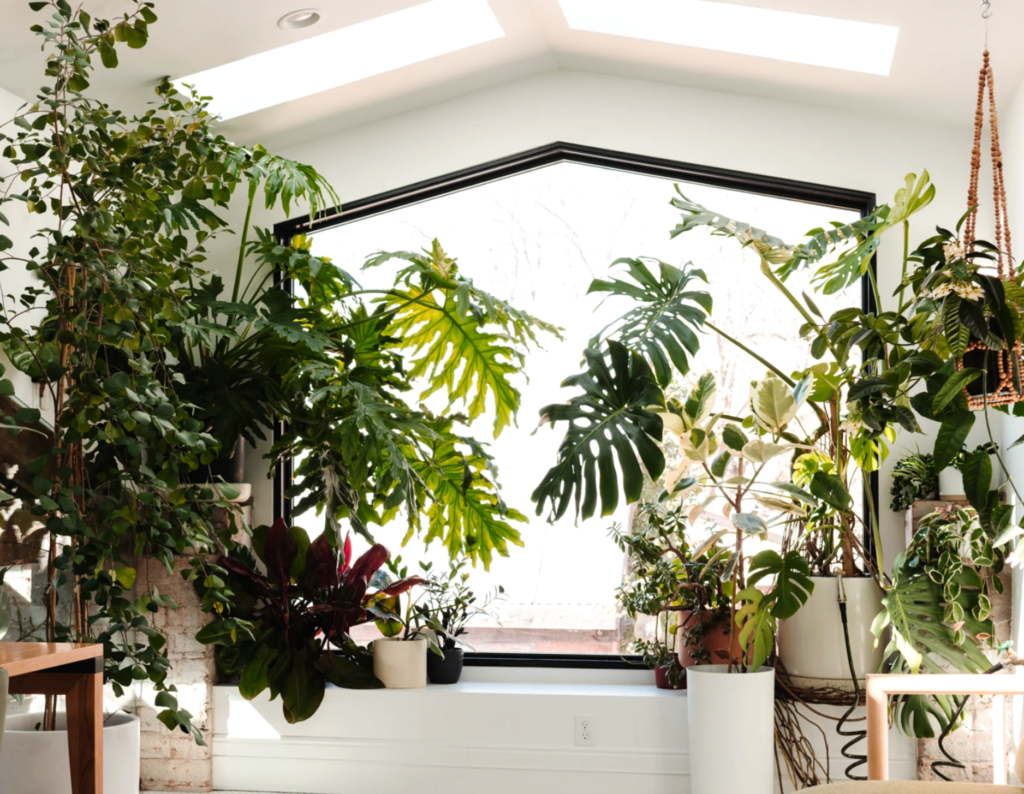
Pentagon windows — Five-sided, with a rectangular lower section and a triangular peak. More glass area than a pure triangle. Especially striking above entry doors or in great rooms with high ceilings.
All three are fixed picture windows. They don’t open. And that’s actually part of what makes them so beautiful. Without hinges, sashes, and hardware, the glass reads as pure geometry. Nothing interrupts it.
What Are the Benefits Beyond Looks?
Light. A picture window high in a gable brings light into a room from an angle no standard window can match. It travels deeper into the space and distributes more evenly. The effect is a room that feels genuinely luminous.
Volume. Roofline windows draw the eye upward. Rooms feel taller and more expansive. In open-plan homes and great rooms, one well-placed roofline window can change how the whole space feels.
Coherence. From outside, a home with roofline windows looks intentional. The window echoes the roof and everything works together. Architects call this formal coherence. Most people just call it beautiful.
Energy efficiency. Fixed picture windows are more airtight than operable ones. Fewer moving parts means fewer places for air to leak. That matters here in North Carolina, where both summer heat and winter cold put real demands on your home’s envelope.
What Should I Know Before Adding Them?
They don’t open. Roofline picture windows are fixed. If ventilation matters in that space, a nearby casement or awning window can handle that without compromising the look.
Window treatments need planning. Standard blinds don’t fit angled windows. If you need light control or privacy, motorized specialty shades are the answer.
Installation has to be done right. The window sits in or near the roofline, so it has to be properly integrated with the roofing system, flashed and sealed correctly. In our wet North Carolina climate, a poorly installed roofline window can cause serious water damage. This is not a job for a generalist or the average handyman.
They’re made to order. Roofline picture windows are custom manufactured to your roof’s exact angles. Lead times and costs reflect that. So does the result.
Are They Right for My Home?
If your home has a pitched roof, you probably have a gable end or vaulted space that could benefit from a roofline picture window.
The question isn’t “does my house qualify.” It’s “what would it add architecturally, and what’s involved in doing it right?”
That’s exactly the kind of question we love to explore with homeowners. Sometimes the answer is a dramatic full-gable triangle. Sometimes it’s a more modest trapezoid that adds just enough to make a space feel resolved. Either way, the conversation is worth having.
Thinking About Specialty Windows for Your Home?
If you’re exploring window replacement in the Durham area and want to talk through what roofline picture windows might look like for your home, we’d love to hear from you. Bring your Pinterest board, your architect’s drawings, or just a description of what you’ve been imagining. We’ll help figure out what’s possible.
Schedule a free consultation and let’s have a good conversation about your home and what it could be.