
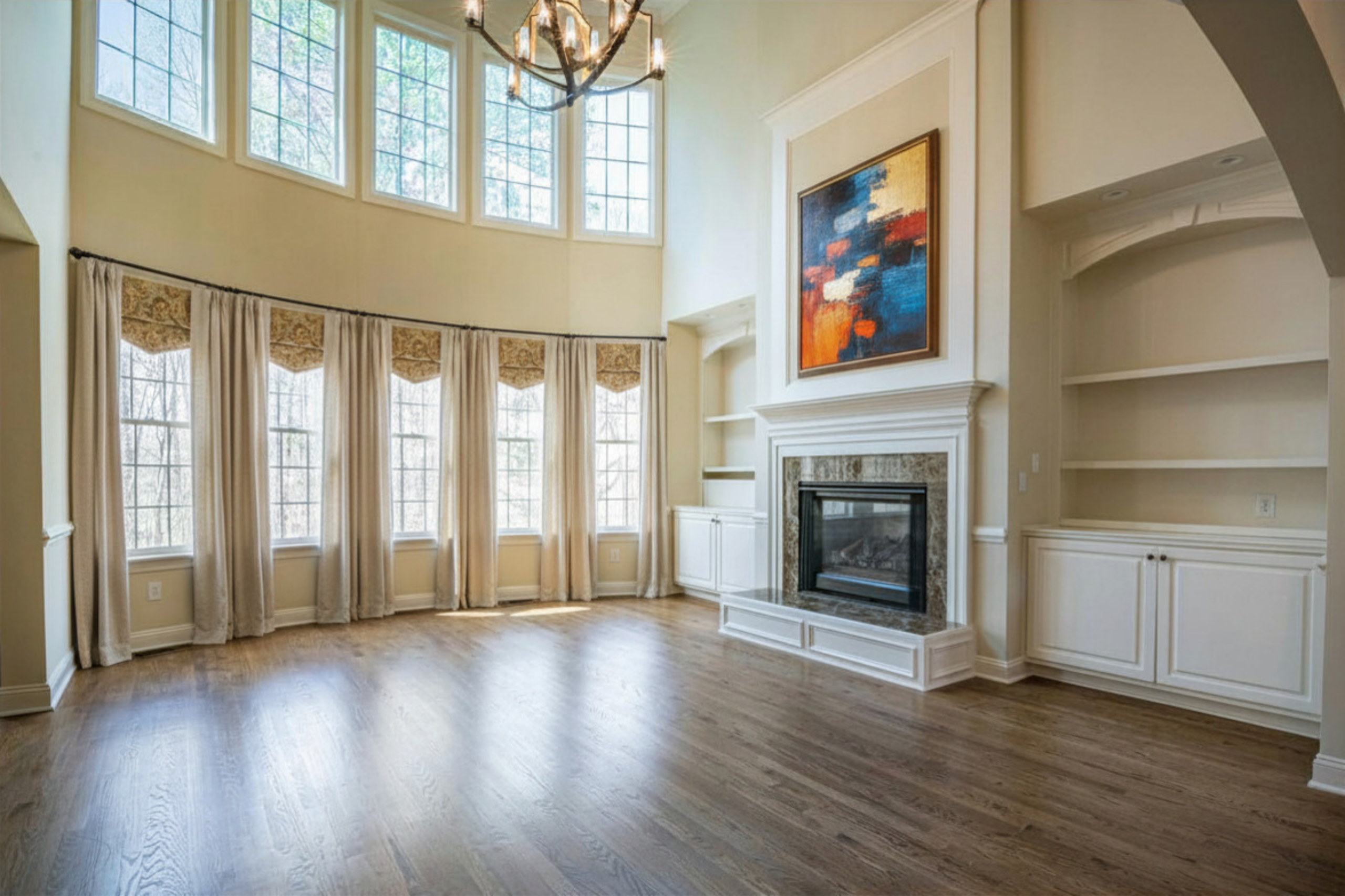
Homeowners in Chapel Hill often ask us how to use windows to bring more natural light into their homes. It’s one of those lovely Chapel Hill problems — the same mature tree canopy that makes the neighborhood so gorgeous in summer is also blocking the light you’d love inside your home. For homeowners looking to add more brilliance without sacrificing what makes their neighborhood special, a clerestory window is one of our favorite solutions.
Clerestory windows are one of those architectural features that do a lot of quiet work. Here’s everything you need to know about them.
What Is a Clerestory Window in a House?
A clerestory window (pronounced KLEER-stor-ee) sits high on a wall — above your normal sight line. Unlike a typical window, it’s not meant for looking out. Instead, it pulls light and fresh air into a space while keeping the wall below free for furniture, storage, or privacy.
The name comes from the term clear story — the upper “story” of a wall that rises above the roofline to let in light.
Clerestory Windows Have Been Around for Thousands of Years
This isn’t a new idea. Ancient Egyptian temples used them, and so did Roman basilicas and Gothic cathedrals. Those soaring stained-glass windows near the roofline that flood the nave with colored light? Clerestories.
Mid-century modern architects picked up the idea too. Frank Lloyd Wright famously used horizontal clerestory bands to blur the line between inside and outside. That influence still shows up across the Research Triangle today, where mid-century ranches and contemporary builds remain a popular local style.
Where Do Clerestory Windows Work in a Home?
Clerestories work best in spaces where you want light but need privacy or wall space. Here’s where homeowners use them most:
Great rooms and open living areas. Light bounces off vaulted ceilings and fills the whole room evenly — no dark corners.
Stairwells. A clerestory above a staircase brightens what would otherwise be a dim, forgotten space.
Bathrooms. Daylight without sacrificing privacy. No frosted glass, no curtains — just light.
Home offices. Natural light above eye level lifts your mood without creating screen glare.
Bedrooms. In neighborhoods like Chapel Hill, where homes sit close together, a clerestory on a shared-wall side brings in morning light without giving your neighbor a view into your bedroom.
What Are the Benefits?
Light without losing privacy. This is the big one. You get the brightness — none of the exposure.
Better ventilation. Hot air rises, and a high clerestory lets it escape. That matters in North Carolina’s humid summers, where passive ventilation can make a real difference in comfort and energy costs.
Visual height. Because your eye travels upward, rooms feel taller and more open than they actually are.
Furniture freedom. Since the window sits high on the wall, you’re not working around it or worrying about blocking it.
Are There Any Drawbacks?
The benefits are real, but there are a few tradeoffs worth knowing:
They’re hard to reach. Cleaning and operating clerestory windows usually means a ladder or extension pole. If you want them to open, ask about crank or remote-operated hardware.
They can overheat a room. South- and west-facing clerestories bring in a lot of afternoon sun — great in winter, uncomfortable in summer. Fortunately, Low-E glass coatings solve this, and it’s something we discuss with every homeowner during consultation.
Installation is complex. Because these windows sit high on the wall, installation sometimes involves structural work a standard window replacement doesn’t. This isn’t one to DIY.
Clerestory vs. Transom — What’s the Difference?
These two window types are easy to confuse, but the distinction is straightforward.
A transom sits directly above a door or window. It’s mostly decorative — a little extra light and visual interest near eye level.
A clerestory, on the other hand, sits much higher — near the top of the wall, above where you’d place furniture or hang art. Its job is getting light deep into a space.
The simplest way to remember it: a transom is above a door. A clerestory is above everything else.
How Much Do Clerestory Windows Cost?
The windows themselves aren’t more expensive than any other window — pricing works the same way, based on dimensions, glass package, frame material, and brand.
Where costs can increase, however, is installation. Getting workers and equipment up high may add labor costs that a standard window replacement wouldn’t carry. It depends on the home and the height involved, so it’s worth factoring into your budget conversation early.
Thinking About Adding Clerestory Windows?
If you’re exploring window replacement in the Chapel Hill area, we’d love to talk through whether clerestory windows make sense for your space. No pressure, no upsell — just an honest conversation about what’s possible.