
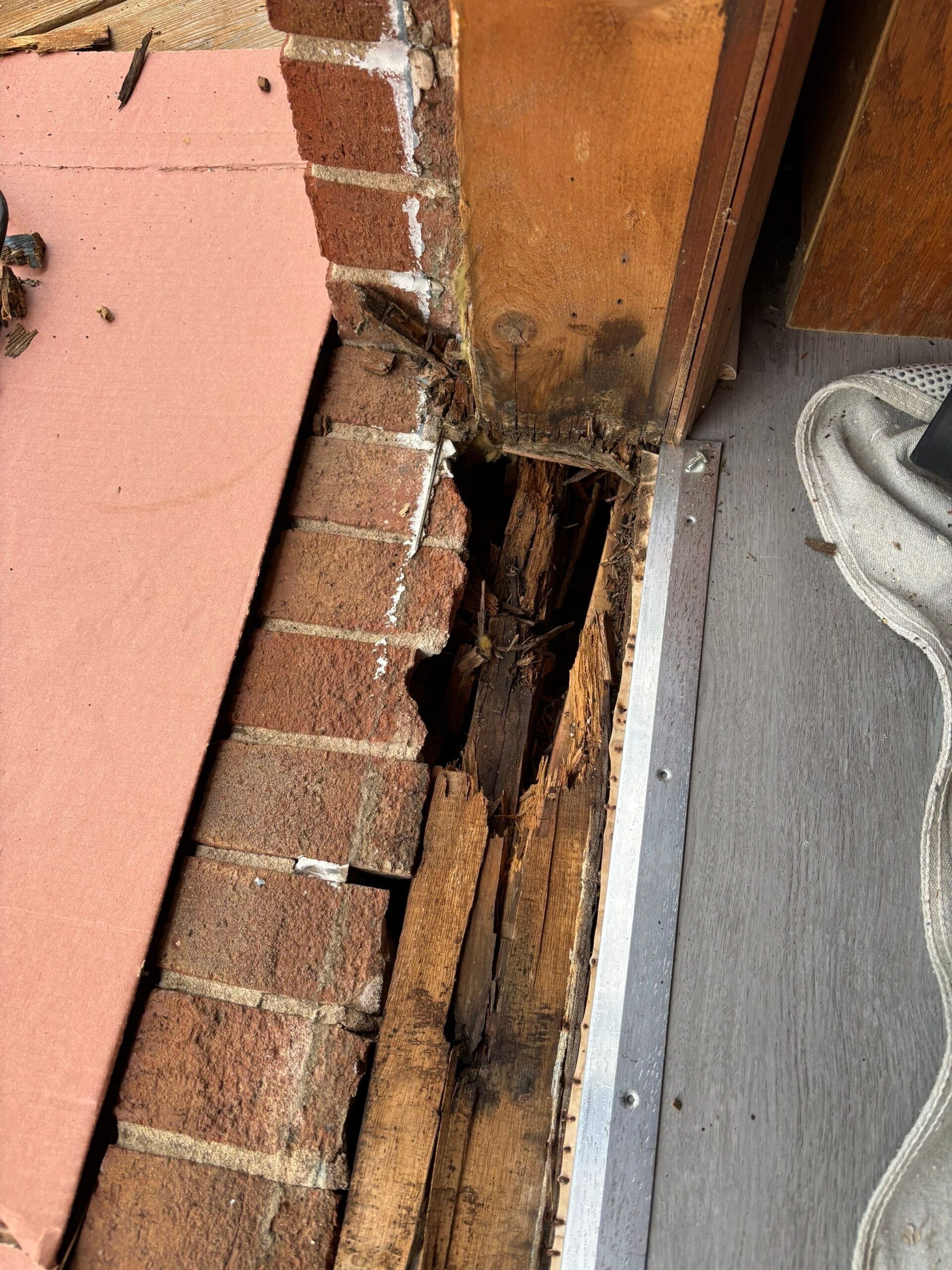
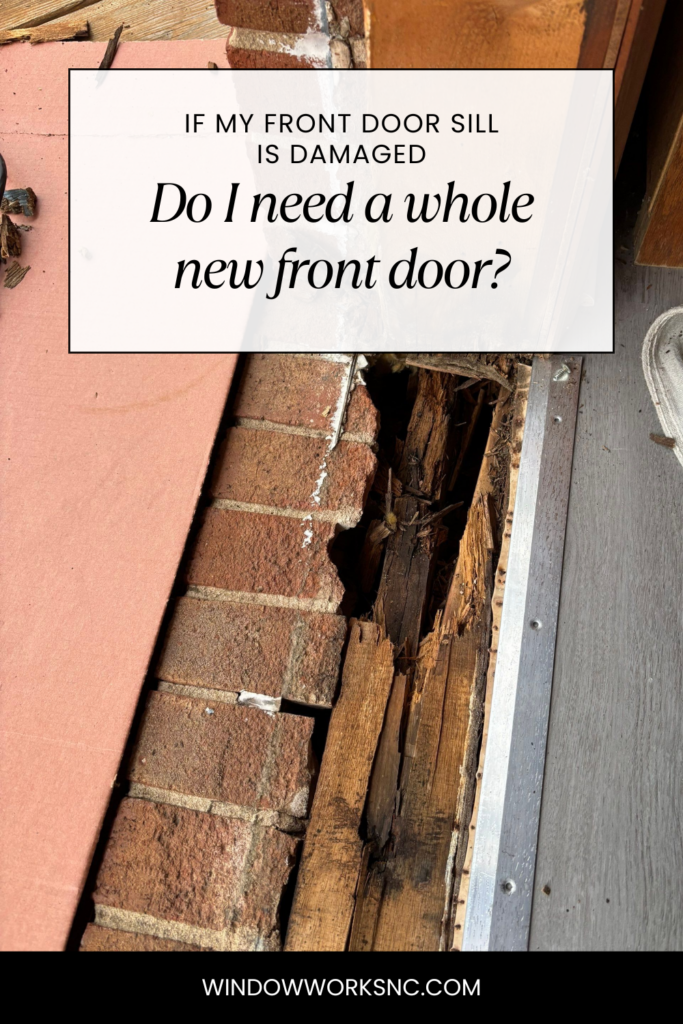
Homeowners who visit our door showroom often notice a problem at the base of their entryway. Naturally, their first question is usually: “If my front door sill is damaged, do I need a whole new door?”
Understanding the anatomy of your entryway is the first step in deciding whether you need a simple repair or a full replacement. If your door sill is cracked, rotted, or dented, you likely need a brand-new door. Because of how modern doors are engineered, the sill is no longer just a “piece of trim.” Instead, it serves as the foundation of the entire unit.
What Exactly Is a Door Sill?
In modern door construction, the sill and the threshold are almost always a single, integrated component.
Specifically, the sill refers to the entire structural base of the door frame that sits on your floor. The threshold is technically the top surface of that sill—the part you actually step over. On older homes, you might have seen a wooden sill with a separate metal strip on top. However, today’s high-performance doors use a one-piece assembly designed to be completely airtight and watertight.
Common Door Sill Materials: What Is Your Entryway Built On?
Because the sill handles constant foot traffic and standing water, the material choice is vital for longevity. Here are the three most common types you will encounter:
1. Wood Sills
In older homes, sills were often made of solid oak. While beautiful, they are frequently the “weak link” in an entryway.
- The Problem: Once the finish wears down, wood sills soak up moisture like a sponge. This leads to swelling and eventually results in rot that can spread into your home’s subfloor.
2. Aluminum Sills
Aluminum is the current industry standard for high-quality replacement doors. This material is durable, won’t rust, and can be molded into complex shapes that channel water away from the house.
- Thermal Breaks: High-quality aluminum sills include a “thermal break.” This is a strip of reinforced plastic in the middle that prevents outside temperatures from traveling through the metal into your home.
3. Composite Sills
Many of the doors we install at Window Works Co. feature composite sills. Manufacturers make these from high-tech resins that look like wood but remain entirely waterproof.
- The Benefit: These will never rot, warp, or crack. This makes them the best choice for the humid climate.
3 Reasons Why a Damaged Sill Usually Requires a New Door
1. The Integrated “Pre-Hung” Design
Modern sills are one-piece units routed directly into the side jambs of the door frame. Because they are glued and fastened at the factory to create a waterproof seal, you cannot easily “pop out” a damaged sill. Attempting to do so often destroys the side jambs and breaks the door’s weather seal.
2. Hidden Rot
Sill damage is often just the tip of the iceberg. If a sill is leaking, that water has likely traveled to the door jambs or the subfloor beneath the door. Replacing just the sill—even if it were possible—would not fix the rot already spreading into the structural wood of your home.
3. Precision Engineering
Modern sills use specific slopes and “weep holes” to drain water. If a sill is dented or cracked, that drainage system fails. Consequently, water can back up under the door and onto your hardwoods. Once that precision-engineered shape is compromised, a “patch” rarely restores the original protection.
When Can You Just Do a Repair?
There are a few instances where you might avoid a full replacement:
- The Adjustable Cleat Is Worn: Many modern sills have a plastic or wood “cap” held in by screws. If this part is simply scratched, you can often replace it individually.
- Adjusting the Height: If you have a draft, you can often turn the screws on the threshold. This raises the cap so it meets the “sweep” on the bottom of your door, restoring the seal.
The Bottom Line
At Window Works Co., we want your entryway to be a “one and done” investment. While a quick fix is tempting, a compromised foundation usually means the door can no longer protect your home. Replacing the unit with a modern, rot-proof composite or aluminum-sill door is the best way to ensure your home stays dry for decades.
If your front door sill is damaged, we can help you figure out the right steps to take. Contact the Window Works Co. team today for a professional entry door consultation.